Introverts and Socialising – Insights & Themes (Enhanced Extracts)

A compilation of extracts from a variety of articles to reveal the nature of introverts in relation to the conditions of socialising and their experiences with it. Organized by ten themes, this series of concise passages aims to provide much needed perspective on an obscured topic, and a source that may serve as a useful reference.

The nature of introversion and the conditions of socialising.

Last year I discovered and read the book Quiet: The Power of Introverts in a World That Can’t Stop Talking, by Susan Cain (2012). Having not explored the topic of introversion and extraversion personality types, I gained much perspective on these concepts through the author’s research and insights. Being an introvert herself, Cain clarifies not just what it means to be of introverted nature but to be so in a world conditioned by extraverted traits, behaviours, and ideals.

Since then, this general perspective of introversion vis-à-vis extraverted culture has remained at the back of my mind in relation to my routine social experiences. Recently, I decided to further explore not the general topic, but rather discussion of introverted nature in the context of the social experiences of introverts. In other words, I sought information that was more personally relevant to being introverted in an extraverted social world; and essentially, to identify, clarify, and examine the conditions, effects, and factors of this inter-personality relationship.

Continue reading “Introverts and Socialising – Insights & Themes (Enhanced Extracts)”
The Nature and Development of Understanding

An essay on Understanding (or, understanding for an Understanding of UNDERSTANDING)

Understanding—is of most importance to understand.

I

For the proper philosophical discussion about any particular thing, the identification of the thing itself is more important than the word used to refer to it: A word is merely a tool used to approximate the meaning of a concept, thus enabling an expedient means to refer to that concept in conversation or writing. In a way, this conventional approximation of conceptual meaning highlights the purpose of Philosophy, which I define here as the unmotivated, uncompromised expression of the innate need to Understand. And, Understanding is perhaps the most important concept to philosophise about—which I define here as the pure and thorough attempt to clarify the essence and significance of a thing.                    Thus for this essay, a cluster of related ‘things’ I consider worthy of discussion are most closely approximated by the word ‘understanding’, with each of these things representing a particular aspect of that concept, thereby being a different sense of its meaning. Hence, I will use the word ‘understanding’ in multiple senses, supported by my definition of each one; and by which I attempt to describe these particular aspects of Mind and Life.

Continue reading “The Nature and Development of Understanding”

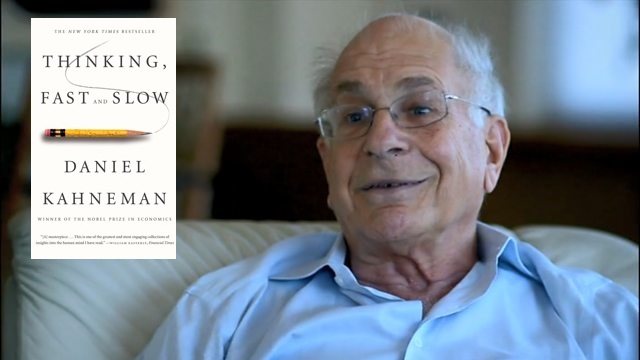
How You Really Make Decisions: BBC Horizon Documentary on Kahneman’s “Thinking Fast and Slow” – Themes & Analysis

An analysis of a psychology documentary based on the work of Prof Daniel Kahneman (—and not without a touch of sarcasm! 😉 )

Prof Daniel Kahneman in the psychological documentary: How You Really Make Decisions, based on his book: Thinking, Fast and Slow

The 2013 Horizon Documentary (BBC) How You Really Make Decisions features several psychologists providing their insights on this theme, most prominent of which is Prof Daniel Kahneman, whose best selling book Thinking, Fast and Slow serves as the basis for the programme.

Continue reading “How You Really Make Decisions: BBC Horizon Documentary on Kahneman’s “Thinking Fast and Slow” – Themes & Analysis”
Design a site like this with WordPress.com
Get started