An analysis of a psychology documentary based on the work of Prof Daniel Kahneman (—and not without a touch of sarcasm! 😉 )
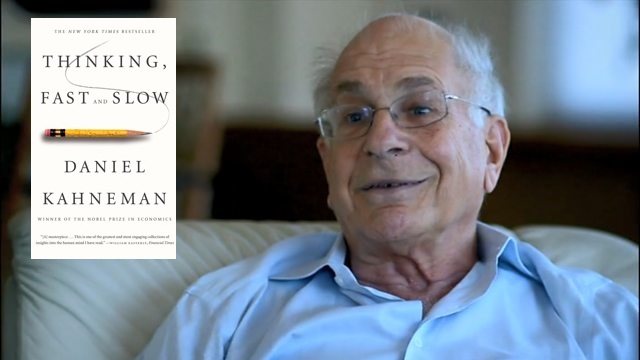
Prof Daniel Kahneman in the psychological documentary: How You Really Make Decisions, based on his book: Thinking, Fast and Slow
The 2013 Horizon Documentary (BBC) How You Really Make Decisions features several psychologists providing their insights on this theme, most prominent of which is Prof Daniel Kahneman, whose best selling book Thinking, Fast and Slow serves as the basis for the programme.
A compilation of my notes from the book: Plagues and Peoples, by William H. McNeill (1976); complimented by my summarizing sub-headings.
Plagues and Peoples: a historicalinterpretation by an epidemiologically-learned historian.*
*i.e. Pandemics in perspective—par excellence!
As quoted by the Lancet behind the front cover of this book,
Professor McNeill is an American historian with a sound grasp of epidemiological principles.
As McNeill points out himself in this book (which can be seen immediately in the notes to follow), historians systematically gloss-over the significance of epidemic disease.
In choosing to read Plagues and Peoples third in my sequence of pandemic-themed books, I identified it as the one most complimentary to Daniel Defoe’s A Journal of the Plague Year: for while the latter is “the prototype of all accounts of great cities in times of epidemic”, the former has to be one of, if not the most substantial attempts at a historicalinterpretation of epidemics (—which is quite distinct from an epidemiological interpretation of history, I would add).
An arranged compilation of my notes from the book: Viruses and Man, by F. M. Burnet (1953).
Viruses and Man, by F. M. Burnet (1953)
As I said in introductions to the first and second posts of this article series, Defoe’s A Journal of the Plague Year was probably the best book to begin this study, as it seems to cover the whole spectrum of situations and incidents that can arise in a pandemic, whilst presenting them in an accessibly narrative form. Following Defoe’s most insightful story, I decided to select one of the academic books in my collection to read next—that being, Viruses and Man, by F. M. Burnet (1953).
A thematic breakdown of the book A Journal of the Plague Year, by Daniel Defoe (1722)
Detail of the Penguin Classics Edition of Daniel Defoe’s A Journal of the Plague Year (1722)
Following my notes (presented in the previous post) on the book A Journal of the Plague Year, which were quite extensive; the following is a categorization of the most significant themes I have discerned from those notes, which are quite concise.
The main categories of the themes are Societal Dynamics, Conduct of Authorities, and Psychological Effects—the first two being the most substantial and thus each being divided into subheadings.
Having completed this list of themes, I find that Defoe’s A Journal of the Plague Year*clearly reveals its striking relevance to 21st century occurrence of plague; and its breadth of insight – within its accessible, narrative form – testifies to its likely being the best book one can start with towards gaining a perspective on pandemics.
An arranged compilation of my notes from the book: A Journal of the Plague Year, by Daniel Defoe (1722).
A Journal of the Plague Year, by Daniel Defoe (1722)
Following the establishment of a global pandemic a few weeks ago, I went through my personal library of books to select those which have direct relevance to the nature and effects of pandemics: as since these things have suddenly become of utmost significance to all, I think it now appropriate to gain some perspective on the subject.
Of the books I selected for this study of pandemics, Daniel Defoe’s A Journal of the Plague Year* stood out as the best one to begin with, for it thoroughly depicts The Great Plague of London that occurred 1665-1666.
*The full text is in the public domain, and can be accessed for free at Gutenberg.org)
In the second part of this article series, I identify twelve different subjects (including sub-types), which I classify by their ideal mood for comprehension; whilst also providing examples and photographic samples to support the description of each type and sub-type.
The major subjects of literature—but what are the ideal moods for reading them?
INTRODUCTION
Having long had a personal interest in seeking and reading the most substantial literature available, I have in the process acquired an experience of book-reading that covers all of the major subjects in literature. As a part of this experience, my mind naturally formed classifications of the qualities and uses of each subject; as well as the particular ‘moods’ I found to be best suited for engaging with their different characteristics. The aim of this article, then, is to clarify and share this experience by making these classifications—hopefully to the interest, if not to the benefit, of fellow book-readers.
In the first part of this article series, I identify fourteen different types of book, which I classify by their required mode of concentration; whilst also providing examples and photographic samples to support the description of each type.
So many types of book—but what are the types of reading?
Introduction
Over the course of the years during which I have been reading books regularly, a particular categorization of book-types naturally formed in my mind. Specifically, it is based on the distinct kinds of concentration I found to be demanded by different books. These different kinds of concentration can be thought of as different modes of reading; and the classification of them in this sense may be useful for a regular reader of books to consider and refer to, towards a more conscious and informed practise of book-reading.
A discussion of the role of the Conductor in both music and society, beginning with my casual impressions (complimented with satirical examples); and followed by critical insights from a socio-musicologist, as well from conductors and composers themselves.
The Conductor (“Leopold!”)
Although I have yet to acquaint myself with orchestral performance, which does interest me; the passive familiarity I have with it has nevertheless left me with a particular impression—specifically, regarding the role of the Conductor, which appears to be strikingly suspect. Upon casual contemplation, I had formed some substantial thoughts about it, from which I felt the subject would be would worthwhile to investigate one day. And due to this question of the Conductor being brought up by someone in a group conversation, that day eventually arrived.
An article on Stranger Things (SPOILER: it’s duffing long!)
Stranger Things – A Netflix Original [heh] Series
Retromania: from the 2000s onward, pop culture has lacked the creative, future-oriented, dynamic energy of the previous decades: rather than opening the future, it inaugurated the ‘Re’ era, i.e. dominated by the ‘re-’ prefix – such as in revivals, reissues, remakes, re-enactments – thus representing endless retrospection. The post-millennium ushered in an era of unoriginality that feeds on its own history, trades in references, and quickly begun to rework material from a past that is increasingly immediate—thus has pop culture turned into an endless act of regurgitation.
What does this have to do with Stranger Things? With the debut of this series in 2016, pop culture has seen a particular development of retromania: from the mania of retro, i.e. the cultural pervasiveness of it; to the intensification of retro, i.e. the artifactual over-dosage of it.
And hence: Retroverdose (on strangely familiarthings)…
This article features a selection of quotes from the book Homo Deus, each accompanied by my notes, comments, and references to related media.
Transhumanism: Humanity in ‘Upgrade Mode’
Part 3 of this article series features my expansion of Ncaps 31-40 for the book Homo Deus (as discussed in the Introduction, which also includes the full list), as a basis for identifying points of significance and referencing a variety of relevant media.
Themes covered in Part 3 includeDialectics of Government, Principles of Revolution, Submission to Authority, Continuity of The Establishment, Emotional Decision-Making, Elite Minority Rule, Conceits of Modernity, Social Instability, Civilized Barbarism, Collectively Believed Fictions, Society as Entrapment, Hindsight via History, Suppression of Awareness, Ideological Bio-Engineering, Prophetic Sci-Fi, Modern Forms of Religion, Rationalized Immorality, Incongruous Speech, Hypocrisy of Civilization.



 Stepping Stones