The Nature of Will and the Sophistry of “Free Will” | Essay

An eight-part essay on will and ‘free will’.

“I am not a “free” number: I am a WILLFUL MAN!
(Image from The Prisoner, 1967-1968 TV Series)

I

Over the last century, general discourse concerning the topic of ‘free will’ has become increasingly more pronounced in Western culture—a trend that reflects the rapid development of societal complexity during this period: for especially since the postmodern era, the organisational phenomena of bureaucracy, specialisation, and compartmentalisation have intensified the diffusion not only of responsibility but also of knowledge. Concomitantly, scientific theory has supplanted philosophy as the locus of epistemology, producing theoretical phenomena such as relativity and quantum mechanics and instilling them into the foundation of Western ideology. Effectively, such theories have undermined not just traditional knowledge and wisdom but the very basis for their acquisition, i.e. the subjective perception of an objective reality.   In concert, postmodern developments have thus created a culture of disintegrating knowledge and implicit indeterminacy, wherein matters both philosophical and practical are deemed – tacitly more so than explicitly – to be fundamentally uncertain. Crucially, this ideological domination includes the dimension of institutional contradiction; as in, for example, the periodical turnover of scientific axioms, many of which are treated as dogma until they have been deemed falsified and replaced by new axiomatic ‘truths’.
            Within this culture of impenetrable systemisation and philosophical confusion, the question of free will has arisen to prominence: For at least the last half-century, Western culture has been affirming an inherent inability to determine anything at all, let alone an ideology that is clear, consistent, and stable. Adversely, it has instilled a societal paradigm of reactionary measures against the flux of indeterminable existence, which thus represents the postmodern ideology of Western culture—an ideological inversion of Ideology.

Continue reading “The Nature of Will and the Sophistry of “Free Will” | Essay”

The Nature and Development of Understanding

An essay on Understanding (or, understanding for an Understanding of UNDERSTANDING)

Understanding—is of most importance to understand.

I

For the proper philosophical discussion about any particular thing, the identification of the thing itself is more important than the word used to refer to it: A word is merely a tool used to approximate the meaning of a concept, thus enabling an expedient means to refer to that concept in conversation or writing. In a way, this conventional approximation of conceptual meaning highlights the purpose of Philosophy, which I define here as the unmotivated, uncompromised expression of the innate need to Understand. And, Understanding is perhaps the most important concept to philosophise about—which I define here as the pure and thorough attempt to clarify the essence and significance of a thing.                    Thus for this essay, a cluster of related ‘things’ I consider worthy of discussion are most closely approximated by the word ‘understanding’, with each of these things representing a particular aspect of that concept, thereby being a different sense of its meaning. Hence, I will use the word ‘understanding’ in multiple senses, supported by my definition of each one; and by which I attempt to describe these particular aspects of Mind and Life.

Continue reading “The Nature and Development of Understanding”

A Typology of Book-Reading – Part III: Methods for Assimilation

In the third and final part of this article series, I describe four notable aspects of books; followed by various methods for assimilating information and thoughts generated through book-reading; whilst including examples and photographic samples throughout for illustration.

I read; therefore I am—but how can one assimilate?

INTRODUCTION

As someone who began to read books regularly for the purpose of intellectual stimulation, I naturally discovered various ways to improve my conduct of book-reading towards higher degrees of efficiency. In this article, I describe the principles and methods derived from my experience in book-reading, which I offer for the potential benefit of similarly oriented individuals.
               Essentially, these principles and methods* concern the effective assimilation of information and thoughts from one’s reading experiences. However, as individuals tend to differ in their purpose for reading and capabilities of assimilation, factors of and methods for assimilating literature can apply differently on an individual basis—hence, the methods here are offered as tips for anyone who regularly reads literature; or at the least, as a stimulant to one’s thoughts on ways to make more effective use of their literature and more efficient use of their reading time.

Continue reading “A Typology of Book-Reading – Part III: Methods for Assimilation”

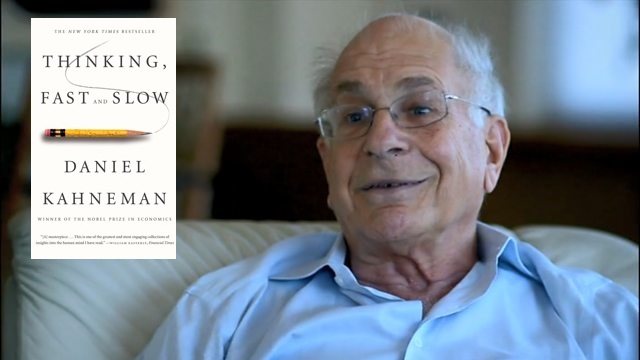
How You Really Make Decisions: BBC Horizon Documentary on Kahneman’s “Thinking Fast and Slow” – Themes & Analysis

An analysis of a psychology documentary based on the work of Prof Daniel Kahneman (—and not without a touch of sarcasm! 😉 )

Prof Daniel Kahneman in the psychological documentary: How You Really Make Decisions, based on his book: Thinking, Fast and Slow

The 2013 Horizon Documentary (BBC) How You Really Make Decisions features several psychologists providing their insights on this theme, most prominent of which is Prof Daniel Kahneman, whose best selling book Thinking, Fast and Slow serves as the basis for the programme.

Continue reading “How You Really Make Decisions: BBC Horizon Documentary on Kahneman’s “Thinking Fast and Slow” – Themes & Analysis”

Pandemics in Perspective: Plagues and Peoples, by William H. McNeill (1976) – Book Notes & Themes

A compilation of my notes from the book: Plagues and Peoples, by William H. McNeill (1976); complimented by my summarizing sub-headings.

Plagues and Peoples: a historical interpretation by an epidemiologically-learned historian.*

*i.e. Pandemics in perspective—par excellence!

As quoted by the Lancet behind the front cover of this book,

Professor McNeill is an American historian with a sound grasp of epidemiological principles.

As McNeill points out himself in this book (which can be seen immediately in the notes to follow), historians systematically gloss-over the significance of epidemic disease.

In choosing to read Plagues and Peoples third in my sequence of pandemic-themed books, I identified it as the one most complimentary to Daniel Defoe’s A Journal of the Plague Year: for while the latter is “the prototype of all accounts of great cities in times of epidemic”, the former has to be one of, if not the most substantial attempts at a historical interpretation of epidemics (—which is quite distinct from an epidemiological interpretation of history, I would add).

Continue reading “Pandemics in Perspective: Plagues and Peoples, by William H. McNeill (1976) – Book Notes & Themes”

Pandemics in Perspective: Viruses and Man, by F. M. Burnet (1953) – Book Notes & Subtopics

An arranged compilation of my notes from the book: Viruses and Man, by F. M. Burnet (1953).

Viruses and Man, by F. M. Burnet (1953)

As I said in introductions to the first and second posts of this article series, Defoe’s A Journal of the Plague Year was probably the best book to begin this study, as it seems to cover the whole spectrum of situations and incidents that can arise in a pandemic, whilst presenting them in an accessibly narrative form. Following Defoe’s most insightful story, I decided to select one of the academic books in my collection to read next—that being, Viruses and Man, by F. M. Burnet (1953).

Continue reading “Pandemics in Perspective: Viruses and Man, by F. M. Burnet (1953) – Book Notes & Subtopics”

Pandemics in Perspective: Themes of Defoe’s A Journal of the Plague Year

A thematic breakdown of the book A Journal of the Plague Year, by Daniel Defoe (1722)

Detail of the Penguin Classics Edition of Daniel Defoe’s A Journal of the Plague Year (1722)

Following my notes (presented in the previous post) on the book A Journal of the Plague Year, which were quite extensive; the following is a categorization of the most significant themes I have discerned from those notes, which are quite concise.

The main categories of the themes are Societal Dynamics, Conduct of Authorities, and Psychological Effects—the first two being the most substantial and thus each being divided into subheadings.

Having completed this list of themes, I find that Defoe’s A Journal of the Plague Year* clearly reveals its striking relevance to 21st century occurrence of plague; and its breadth of insight – within its accessible, narrative form – testifies to its likely being the best book one can start with towards gaining a perspective on pandemics.

Continue reading “Pandemics in Perspective: Themes of Defoe’s A Journal of the Plague Year”

Pandemics in Perspective: A Journal of the Plague Year

An arranged compilation of my notes from the book: A Journal of the Plague Year, by Daniel Defoe (1722).

A Journal of the Plague Year, by Daniel Defoe (1722)

Following the establishment of a global pandemic a few weeks ago, I went through my personal library of books to select those which have direct relevance to the nature and effects of pandemics: as since these things have suddenly become of utmost significance to all, I think it now appropriate to gain some perspective on the subject.

Of the books I selected for this study of pandemics, Daniel Defoe’s A Journal of the Plague Year* stood out as the best one to begin with, for it thoroughly depicts The Great Plague of London that occurred 1665-1666.

*The full text is in the public domain, and can be accessed for free at Gutenberg.org)

Continue reading “Pandemics in Perspective: A Journal of the Plague Year”

A Typology of Book-Reading – Part II: Moods for Comprehension

In the second part of this article series, I identify twelve different subjects (including sub-types), which I classify by their ideal mood for comprehension; whilst also providing examples and photographic samples to support the description of each type and sub-type.

The major subjects of literature—but what are the ideal moods for reading them?

INTRODUCTION

Having long had a personal interest in seeking and reading the most substantial literature available, I have in the process acquired an experience of book-reading that covers all of the major subjects in literature. As a part of this experience, my mind naturally formed classifications of the qualities and uses of each subject; as well as the particular ‘moods’ I found to be best suited for engaging with their different characteristics. The aim of this article, then, is to clarify and share this experience by making these classifications—hopefully to the interest, if not to the benefit, of fellow book-readers.

The twelve categorized subjects are as follows: Philosophy, History, Sociology (inc. Anthropology), Psychology, Communication & Media, Science, Exposé, Fiction, Literary Study, Entertainments Study, Personal Development, Reference.

Continue reading “A Typology of Book-Reading – Part II: Moods for Comprehension”

A Typology of Book-Reading – Part I: Modes of Concentration

In the first part of this article series, I identify fourteen different types of book, which I classify by their required mode of concentration; whilst also providing examples and photographic samples to support the description of each type.

Bookshelf
So many types of book—but what are the types of reading?

Introduction

Over the course of the years during which I have been reading books regularly, a particular categorization of book-types naturally formed in my mind. Specifically, it is based on the distinct kinds of concentration I found to be demanded by different books. These different kinds of concentration can be thought of as different modes of reading; and the classification of them in this sense may be useful for a regular reader of books to consider and refer to, towards a more conscious and informed practise of book-reading.

The fourteen book-types I have identified, termed, and will classify here are the Technical, Referential, Deep, Philosophical, Harrowing, Dissonant, Illustrated, Voluminous, Benign, Conversational, Narrational, Allegorical, Anthological, Pictorial.

Continue reading “A Typology of Book-Reading – Part I: Modes of Concentration”
Design a site like this with WordPress.com
Get started